Author: Bolaji

  • The Psychology of Desire

    The Psychology of Desire

    The Psychology of Desire

    Wanting is ancient. Marketing is not.

    Human desire predates civilization itself.

    Long before advertisements, algorithms, or social media influencers, our ancestors were driven by powerful instincts: the search for food, status, belonging, and security. Desire helped humans survive.

    Modern marketing did not create these impulses. It learned how to speak their language.

    Today’s digital platforms are extraordinarily effective at identifying and amplifying desire. Every click, search, and interaction contributes to increasingly sophisticated models of human behavior. Companies know more about what people want—and sometimes what they might want next—than ever before.

    Yet desire remains surprisingly misunderstood.

    People often believe they want products when they are actually seeking experiences, identities, or emotions. A luxury watch may symbolize achievement. A fitness subscription may represent hope. A new phone may satisfy a need for belonging.

    Understanding desire means recognizing that consumption is rarely about objects alone.

    At its core, desire is a story people tell themselves about who they are and who they wish to become.

    The most effective marketers understand this. The wisest consumers do too.

  • The CEO’s Dilemma

    The CEO’s Dilemma

    The CEO’s Dilemma

    Growth at any cost is over. But what replaces it?

    For years, corporate leadership operated under a simple mandate: grow.

    Expand market share. Increase revenue. Enter new markets. Raise capital. Scale quickly.

    Today, many executives face a more complicated reality.

    Economic uncertainty, geopolitical tensions, and shifting consumer expectations have transformed the operating environment. Investors are no longer rewarding growth alone. They are demanding profitability, sustainability, and resilience.

    This creates a difficult balancing act.

    Invest too aggressively and companies risk overextending themselves. Focus too heavily on efficiency and innovation may suffer. Prioritize short-term earnings and long-term competitiveness can erode.

    The most successful CEOs are redefining growth itself. Instead of pursuing expansion for its own sake, they are investing in strategic capabilities: technology, talent, operational flexibility, and customer trust.

    The question is no longer how fast an organization can grow.

    It is how intelligently it can adapt.

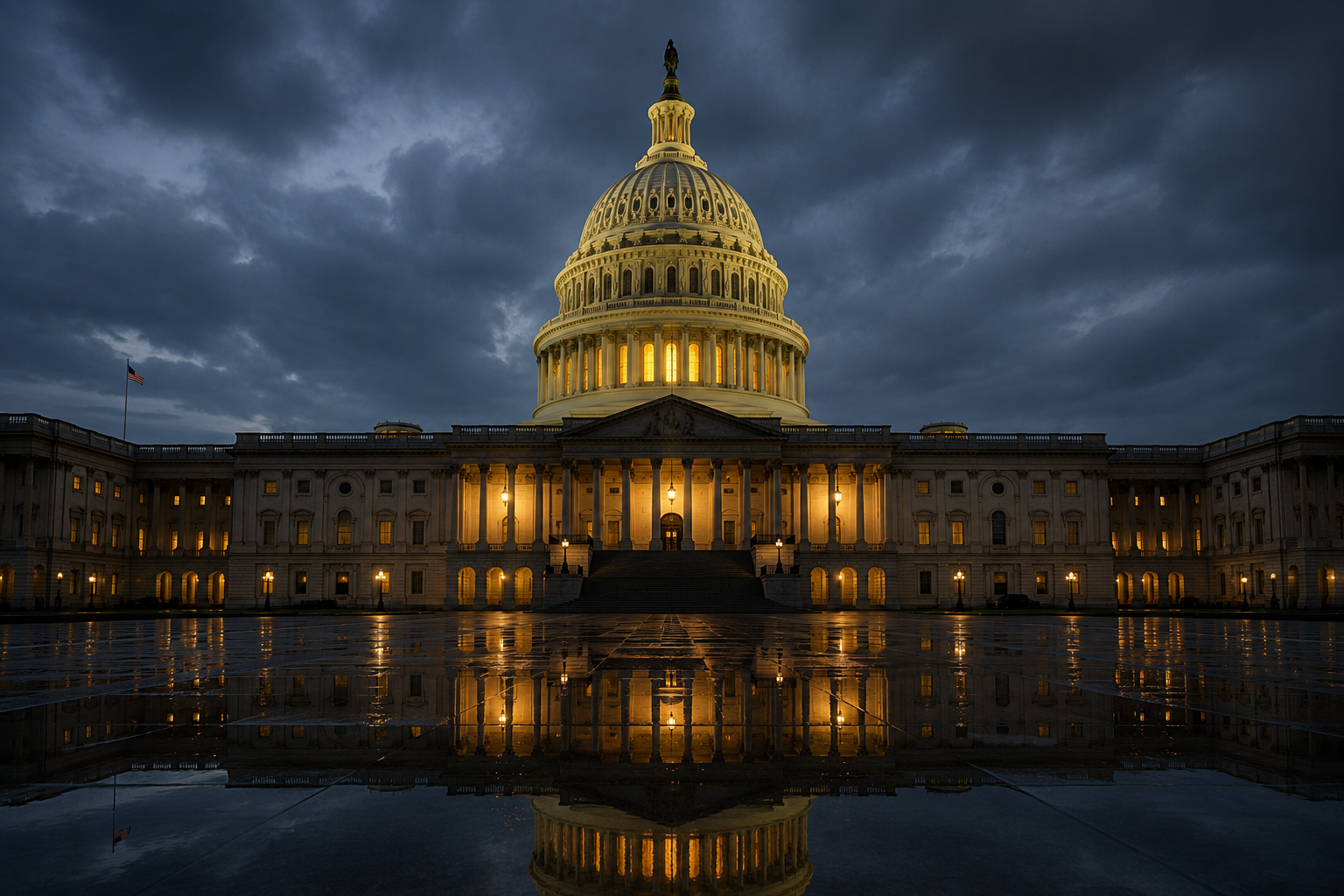
  • America’s Second Constitutional Crisis

    America’s Second Constitutional Crisis

    America’s Second Constitutional Crisis

    Polarization is no longer a bug. It is the system.

    The framers of the United States Constitution designed a government intended to balance competing interests. Checks and balances were supposed to prevent concentration of power while encouraging compromise.

    Today, however, compromise itself appears increasingly elusive.

    Political polarization has evolved beyond disagreement into structural division. Elections are fought not merely over policy but over competing visions of legitimacy, governance, and national identity.

    Institutions that once served as neutral arbiters are increasingly viewed through partisan lenses. Courts, election officials, universities, and media organizations all find themselves caught within broader political battles.

    The danger lies not only in disagreement but in the erosion of shared trust. Democracies depend on a common acceptance of rules, procedures, and outcomes. When those foundations weaken, constitutional systems face unprecedented stress.

    Yet crises often reveal opportunities for renewal. Throughout American history, periods of intense conflict have been followed by institutional reforms that strengthened the republic.

    Whether the current moment becomes a turning point or a prolonged period of instability remains an open question.

  • The Great Repricing

    The Great Repricing

    The Great Repricing

    Private markets, public doubts, and the end of easy returns

    For more than a decade, investors lived in an era defined by abundance. Capital was cheap, interest rates hovered near historic lows, and valuations climbed with remarkable consistency. Startups raised billions before generating profits. Real estate prices soared. Public markets rewarded growth above all else.

    That era is ending.

    The “Great Repricing” is not a single event but a broad adjustment in how markets value risk. As borrowing costs rise and economic uncertainty persists, investors are demanding stronger fundamentals. Businesses that once relied on future promises are now being judged on present performance.

    Private markets have been particularly affected. Venture capital firms are discovering that the assumptions underlying many late-stage valuations no longer hold. Companies once expected to go public at enormous premiums are delaying exits or accepting lower valuations.

    Meanwhile, institutional investors are reassessing portfolios built for a different world. Pension funds, sovereign wealth funds, and family offices are increasingly prioritizing resilience over aggressive growth.

    The result is a market environment where discipline matters again. Revenue quality, cash flow, and operational efficiency have returned to center stage.

    The Great Repricing may feel painful, but it also represents a return to fundamentals. In the long run, healthier markets may emerge from the correction

  • The New Architecture of Global Power

    The New Architecture of Global Power

    The New Architecture of Global Power

    How influence is being reshaped in a multipolar world

    For much of the twentieth century, global power was relatively easy to define. Military strength, economic dominance, and political alliances determined which nations held the greatest influence. Today, however, the architecture of global power is undergoing a profound transformation. The world is moving away from a system dominated by a handful of states toward a more complex network where technology, data, capital, and non-state actors play increasingly important roles.

    The End of Unipolar Dominance

    Following the end of the Cold War, the international system was largely characterized by the dominance of a single superpower. For decades, global institutions, financial systems, and security arrangements reflected this reality. However, the rise of emerging economies, particularly in Asia, has gradually altered the balance.

    Countries such as China, India, Brazil, and Indonesia are expanding their economic and diplomatic influence, creating a more multipolar world in which power is distributed across several centers rather than concentrated in one.

    Technology as a Strategic Asset

    In the twenty-first century, technological leadership has become as important as military capability. Artificial intelligence, quantum computing, semiconductor manufacturing, and cybersecurity now sit at the heart of geopolitical competition.

    Governments are investing billions in digital infrastructure and innovation ecosystems. Control over critical technologies increasingly determines economic resilience, national security, and international influence.

    The race is no longer simply about territory or resources; it is about who controls the platforms, networks, and algorithms that power the global economy.

    The Rise of Economic Statecraft

    Economic tools have become central instruments of power. Trade agreements, sanctions, investment policies, and control of supply chains are now routinely used to advance strategic interests.

    The COVID-19 pandemic exposed vulnerabilities in global production networks, prompting many nations to rethink their dependence on foreign suppliers for critical goods. As a result, economic security has become inseparable from national security.

    Governments are increasingly seeking to balance globalization with resilience, reshaping trade relationships and investment flows around the world.

    Non-State Actors Gain Influence

    Global power is no longer the exclusive domain of nation-states. Multinational corporations, technology platforms, international organizations, and even influential individuals now shape global outcomes.

    A technology company can influence communication patterns for billions of people. Financial institutions can affect the stability of entire economies. Philanthropic organizations can direct resources toward global challenges ranging from public health to climate change.

    This diffusion of influence creates both opportunities and challenges for traditional governance structures.

    Climate and Resource Politics

    Climate change is emerging as a defining factor in global power dynamics. Nations that lead in renewable energy technologies, critical minerals, and sustainable infrastructure may gain significant strategic advantages in the coming decades.

    Competition for resources such as lithium, cobalt, and rare earth elements is intensifying as countries seek to secure the materials necessary for energy transitions and advanced manufacturing.

    Environmental resilience is increasingly becoming a measure of national strength.

    A More Complex Future

    The new architecture of global power is characterized by interdependence, competition, and constant adaptation. No single actor possesses absolute control, and influence is increasingly determined by a combination of economic capacity, technological innovation, diplomatic agility, and societal resilience.

    As the global landscape continues to evolve, success will belong not only to those with the greatest resources but also to those capable of building partnerships, embracing innovation, and navigating uncertainty.

    The future of power will be less about commanding the world and more about connecting it.

  • Hello world!

    Welcome to WordPress. This is your first post. Edit or delete it, then start writing!